Featured Post

Comment Wall

Hello everyone. Feel free to use this post to get in touch with me if you have any general comments or questions.

Showing posts with label Reading. Show all posts

Thursday, October 13, 2016

Week 9 Extra Credit Reading: The Brothers Grimm

This post will cover part B of The Brother's Grimm, translated by Margaret Hunt.
BEARSKIN
Bearskin, from Wikisource
  • The appearance of the Devil is interesting. I hadn't seen any Christian connections yet, but this is classic German writing. Perhaps I just missed them. 
  • The other two daughters killing themselves is exactly the darkness I expected. Plus, the Devil masterminded this whole thing. 
  • This is the second time a couple has received exactly the child they wished for. First, thumb sized, and now a hedgehog. You think that they would learn after a while. 
  • Hans is certainly a weird and principled fellow. Why did he raise those pigs just to let others slaughter them, even after his father shunned him. Also, what happened to his donkeys? Germans eat funny things, but not donkeys. 
  • I never knew there was a Rose-red who was Snow-white's sibling. This should get interesting. 
  • The dwarf being wicked is not what I expected. This might be the story that was "Disneyfied" the most. 
Thanks for reading. 

Week 8 Extra Credit Reading: The Brother's Grimm

This post will cover part A of The Brother's Grimm, translated by Margaret Hunt.

hansel_gretel_larissa_small
Hansel and Grethel, from An Idea
  • I am hoping that my familiarity with many of these stories helps me pick up on the important parts of the originals. I'm expecting these to be much darker than the "Disneyfied" versions. 
  • I'm not disappointed, I never thought Hansel and Grethel's parents would be abandoning them in the forest. 
  • I never expected Hansel to be the one outsmarting everyone. 
  • The Witch really has no since of subtlety, she could have masterminded this situation must better. Hunger will do things to a person. 
  • I do not think i have heard Thumbling before, so I hope it will be interesting. 
  • Thumbling is doing his best to irritate all the criminals of this town despite the fact that he could be broken like a carrot. 
  • I am also not familiar with Allerleirauh, hopefully it will hold my interest more than Thumbling. 
  • That was certainly a weird one. 
Thanks for reading. 
Saturday, October 8, 2016

Week 7 Extra Credit Reading: Aesop for Children

This post will cover part B of Aesop for Children by Milo Winter. 

The Bear and the Bees, by Milo Winter
  • Again, I feel that these lessons have varying levels of application to children. Some seem a little adult and serious, so that even though they hear the story they don't truly have a context for it. 
  • Why does the author switch between Mule and Ass? Is there really such a large distinction, especially in the context of a children's book? 
  • "Once a wolf, always a wolf" seems a little misguided to me. You shouldn't trust people who have wronged you in the past blindly, but the lesson seems to imply that people (including yourself) can never change. 
  • "When the great fall out, the weak must suffer for it" seems like an anti war message if I have ever seen one. 
  • I have almost certainly heard this before, even in economic lessons: Take care of the little things and the big things will take care of themselves.
  • On page 15 all the lessons seem directed at children and not their parents. It's all about honesty and not hurting others for your own gain. 
  • I don't think Milo had heard "there is no bad PR" before he wrote "Notoriety is not fame". 
  • "Do not expect constancy in others if you have none yourself" seems to contradict the earlier lesson about wolves on some levels. 
  • "The weak are made to suffer for the misdeeds of the powerful" seems like another obvious anti war message. 
  • Wouldn't a kindness be wasted if you were kind to the wolf earlier and he betrayed you? There are some serious inconsistencies in this book. 
Thanks for reading. 

Monday, October 3, 2016

Week 7 Reading Continued: The Monkey King

This week I am reading The Monkey King from The Chinese Fairy Book by R. Wilhelm and translated by Frederick H. Martens. This post will cover Part B.
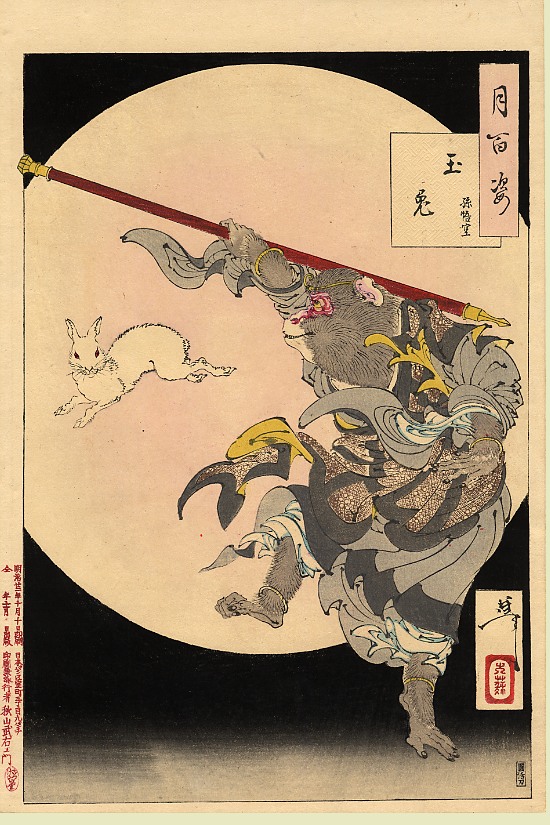
The Monkey King, from Wikipedia

  • The existence of multiple gods in heaven reminds me of the ancient Greek Gods in Olympus. 
  • The Monkey King is making progress on the road to immortality, but I think the ultimate point might be that it has a moral cost. He's stealing things from people, which is bad. But, some of these people may be morally objectionable themselves. 
  • I think it's interesting that he meets the founder of Taoism, kind of like how Jesus is mentioned in the Koran. 
  • I find it interesting, but not surprising, that the Gods don't want any more immortal figures running around and are doing whatever they can to stop the Monkey King. 
  • I wonder what Buddhas motivation will be to stop the Monkey King, Buddha has always struck me as a peaceful figure. 
Thanks for reading with me. 

Week 7 Reading: The Monkey King

This week I am reading The Monkey King from The Chinese Fairy Book by R. Wilhelm and translated by Frederick H. Martens. This post will cover Part A.
The Monkey King, from Wikipedia

  • I'm not sure what this story is intended to be, I have never heard of it before. I don't know if it is a morality tale for children, a serious drama, or some sort of religious text. 
  • I wonder what they mean by "stone" monkey. Is he strong and tough, actually made of stone, or does it refer to his birth? 
  • Speaking of his birth, it seems somewhat like the Virgin birth some of us may be familiar with from the bible. It strikes me as a very common trait among heroes in old stories. 
  • Ahhhh, it is a story about Buddhism. This is starting to make more since to me now. 
  • The fact that he is having trouble focusing really humanizes him. His training ending due to his own faults is interesting. 
  • He has been gone for a while, I wonder what the state of his Kingdom will be when he gets back. 
Thanks for reading with me. 

Sunday, October 2, 2016

Week 6 Extra Credit Reading: Aesop for Children

This post will cover part A of Aesop for Children by Milo Winter.

The Eagle and the Jackdaw, from Laura Gibbs

  • I like how each story has a very simple sentence that directly states the moral of the story. 
  • I think the main difference between these stories and something like the Jataka tales is that not even the "good" characters are innocent of making mistakes or giving into their ego. As best I can tell, the smart animal always wins even if they might not deserve it. That seems to be the overarching moral, regardless of of the individual details of each story. 
  • I think another key element to these stories is to not over extend yourself trying to be nice or to not overestimate your own abilities, even if the stories don't always end badly for the characters who do this. 
  • Another difference from the Jataka tales, as I have mentioned in previous reading notes, is what I feel to be a lack of animal archetypes. For instance, no animal is always good or evil. I think this is a more realistic look at human personalities than the Jataka tales, but maybe it is harder to understand and more confusing for children or younger audiences. 
  • Some of these are lessons that I feel belong more in The Art of War than a children's book. For instance: "Do not let flattery throw you off your guard against an enemy." But some like "Always stop to think whether your fun may not be the cause of another's unhappiness" are clearly simple anti bullying messages. 
  • There does appear to be an exception to the lack of archetype rule I stated early, and that is the Donkey. The author must have hated Donkeys because they are always stupid, stubborn, and lazy in these stories. 
  • The Travelers and the Sea may be the darkest story I have read this semester. "Do not let your hopes carry you from reality" is something that can be hard to swallow at the best of times. 
Thanks for reading along with me. 

Monday, September 26, 2016

Week 6 Reading: Brer Rabbit Part 2

This week I am reading Brer Rabbit by Joel Chandler Harris. This post will cover part B.
Brer Rabbit and Brer Fox, from Wren's Nest
  • Unfortunately I am in the library right now, and cannot try reading the sound effects out loud. 
  • The use of prose in this story reminds me of the proverbs again. This one has a simple message - what goes down must come up. 
  • Brer rabbit using the allure of gold to trick the buzzard just reminds me that he shouldn't have agreed to fly with Mr. Buzzard in the first place. Luckily he was smart enough to recognize that Mr. Buzzard is an opportunist. 
  •  Rabbit framing Bear seems somewhat dark to me. I know the rabbit is supposed to be a trickster, and not necessarily a good person, but the bear might get punished for this. 
  • On second thought , these animals are always trying to trick and out do each other. They are all smart enough to come up with somewhat successful schemes, they could probably get a lot done if they pooled their resources. 
  • I think the biblical influences are really clear in the last two stories. One is a retelling of Noah's Ark as best I can tell. The other is a collection of proverbs. 
Thanks for reading with me. 

Week 6 Reading: Brer Rabbit

This week I am reading Brer Rabbit by Joel Chandler Harris. This post will cover part A.

brer-rabbit
Brer Rabbit, from Sogorep

  • I can tell that this story is placed in the deep South, the Cajun accent is really clear in the reading. It seems that this is a story designed to be told and not read. 
  • Once I move past the language, the story of the Tar Baby had a really clear moral - don't get angry. 
  • I understand what the Coon is saying, that fighting and being brave is important. But, the possum has a good point. Living to see tomorrow is important, and pretending to be dead takes some level of bravery to pull off. 
  • Although the Brer Rabbit later escapes by tricking the fox, his temper landed him there in the first place. 
  • The introduction of Proverbs reminds me a lot of this stories Southern influences. I wonder if this story was inspired at all by Proverbs as a method of story telling, and not only a moral influence. 
  • The similarity between the turtle stories across this, Native American, and Buddhist traditions is surprising to me. I think it's fascinating that people view animal "personalities" so consistently across different cultures. 
  • I wonder how much stories like this are the influence for more modern cartoons like Bugs Bunny - I can easily see a number of similarities. Like characters and themes. 
Thansk for reading. 

Sunday, September 25, 2016

Week 5 Extra Credit Reading: European Fairy Tales Part II

This week I will be reading Andrew Lang's European Fairy Tales I. This post will cover part B.

The Giants and Herd-Boy,  by H.J. Ford

  • I find it odd that some creatures generally construed as evil in modern fairy tales are not so bad in these. It seems that the father voluntarily married his daughters to trolls. 
  • I really don't understand the first story. Was the point to say don't be overly ambitious? Maybe it will come to me later. 
  • Why would the prince not recognize the daughter wasn't Ilonka? The reading seems to imply he's doing it to save face. 
  • Hanging the farmer and his family seems like a very harsh punishment. 
  • I am really having trouble understanding the point of all these stories. There never seems to be a clear moral hero in each one. The Sun Hero didn't seem to be a bad guy, if anything he was a product of his upbringing. 
  • I understand the point of the Herd-boy, one should be generous without needing recognition for that greed. 
  • The Voice of Death almost seems similar to Adam and Eve. The people in that land were innocent, but their curiosity killed them. 
Thanks for reading. 

Tuesday, September 20, 2016

Week 5 Reading: 1001 Arabian Nights

This week I am reading The Arabian Nights' Entertainments by Andrew Lang and illustrated by H.J. Ford. This post will cover part B.

Aladdin and a Genie, from Tales of Faerie

  • I am somewhat familiar with the story of Aladdin, but only the Disney version. I am interested in seeing just how Scheherazade changes the story from what I know to save her own skin. Changing the villian to be African seems mildly racist to me. 
  • The change from a lamp to a ring is interesting, I like the idea of the lamp being a container for the genie. I suppose that the genies are magical beings, and can inhabit a ring. I also find it odd that the genie of the ring is unhappy, calling himself a slave. I wonder if he will be bitter and try to trick Aladdin. 
  • Aladdin seems to be getting everything he wants, I wonder how it will backfire for him.  
  • I feel like genies are maliciously compliant, the genie of the lamp has no sense of loyalty to Aladdin. 
  • The magician having an even more evil brother strikes me as a really cliche way to end a story. 
  • I'm surprised that Aladdin found a happy ending, usually the older fairy tales don't end as happily as the Disney versions. 
Thanks for reading. 

Friday, September 16, 2016

Week 5 Reading: Arabian Nights

This week I am reading The Arabian Nights' Entertainments by Andrew Lang and illustrated by H.J. Ford. This post will cover part A.

  • The context that the short stories are being presented in is a very interesting element to me. Usually there is nothing really on the line for the narrator, they are just telling stories to their grand kid or something along those lines. 
  • I have never considered how "genie" and "genius" are connected as words. Maybe it would be a good place to start my Wikipedia trail this week. 
  • I'm looking forward to finding out how Scheherazade (she really needs a nickname) will convince the Sultan of the error of his ways and save her own life. 
Scheherazade.tif
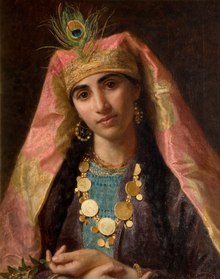
Scheherazade, from Wikipedia
  • The layers of meta storytelling are starting to confuse me. It's like on onion, although I'm not quite ready to cry. 
  • Scheherazade is really playing a risky game here. I find her overarching story to be much more interesting than the ones she is telling to her sister and the Sultan. 
  • I like that Scheherazade is seemingly trying to make the Sultan believe that he is the Genie in all these stories - smart and all powerful, but generous to those who are good to him. Flattery is always a good choice. However, she may be telegraphing too hard when the Fisherman catches the Genie in an enchanted bottle, perhaps the bottle is a metaphor for the Sultan's desire to see the end of the story? 
  • I think the third level of storytelling, involving King Sindbad (possibly a promotion from lucky sailor) and his Vizir is getting to be too much for me. Perhaps Scheherazade simply means to confuse the Sultan, but hopefully it all comes together in the end. 
  • I think the King meeting his death at the hands of the physician, who originally meant him no harm, is the clearest warning that the Sultan has had that something bad might happen to him. 
  • I take it back, the journey the fisherman and the sultan go on seems to be the metaphor about what storytelling and curiosity can do to a person. Maybe this and the Genie trapped in the bottle both are. 
Thanks for reading with me, look for part B soon. 

Sunday, September 11, 2016

Week 4 Extra Credit Reading: European Fairy Tales I

This week I will be reading Andrew Lang's European Fairy Tales I. This post will cover part A.
Image result for Blue Fairy Book
Cover of The Blue Fairy Book, from Dover Publications
  • Our cat seems smart and cocky, I wonder if that will turn out to be a deadly combination in the end. I can't tell if these are going to be dark stories or not yet. 
  • The cat was doing potentially bad things to help his master. I'm shocked that his scheme worked out entirely for everyone involved. 
  • I find it odd that people in old stories become dramatically thinner in short amounts of time when they are distressed. I've never noticed stress affect a persons weight so sharply before. 
  • I can't tell if some level of hubris is a desired or reviled trait in these stories. The King in the second story seemed to lack confidence so much that it was his downfall, but I feel the boy tricking the Dragon is going to let his confidence carry him too far. 
  • I feel like the person who was really tricked was the King, the Trickster probably had a good idea of what would occur. 
  • Does Knowledge itself kill joy, or does the pursuit of Knowledge kill joy? I think the story ultimately decided on the first option, but the second interpretation has some merit. 
  • Ingibjorg certainly didn't deserve to have her feet cut off. This story might be the weirdest so far. 
Thanks for reading. 

Week 4 Reading Cont.: The Voyages of Sindbad

This week I am reading The Voyages of Sindbad, by Andrew Lang. This post will cover Part B.

Sindbad's fifth voyage, from Wikipedia
  • Before I even begin reading, if this guys voluntarily leaves home again, he deserves to die. He's been in too many shipwrecks to count, his 9 lives must almost be out. 
  • Also, how is it than when he inevitably meets the next group of merchants (who I'm sure will restore his fortune), and he tells them about the danger, they just go "Oh Yeah? You didn't know about that"? Sindbad should be a pretty experienced sailor at this point, despite never making it more than a day from his home port before sinking. He should know what islands to avoid. 
  • He even admits leaving for the sixth voyage is foolish. 
  • Sindbad must get by on his charm and storytelling abilities alone. Every king he meets seems to be infatuated with him, and can only give him gifts. If someone told me this story, I would laugh at them. 
  • Pirates and being sold into slavery are the most believable of all the threats Sindbad has faced so far at the very least. 
  • Sindbad is the luckiest man alive. I'm not really sure what the moral of this story is supposed to be. Sindbad is often mentioned as giving to the mosques and the poor, perhaps the message is that alms giving will protect you from evils in life. 
Thanks for reading. 

Week 4 Reading: The Voyages of Sindbad

This week I am reading The Voyages of Sindbad, by Andrew Lang. This post will cover Part A.

Sinbad, from Wikipedia
  • It's interesting that Sindbad signed onto a ship with no previous experience, it seems impulsive. He may have trouble with this, as evidenced by him blowing his fortune. 
  • Since Sindbad was ultimately met with success at the end of his first voyage, I wonder if they will all have happy endings, or if they will alternate between good and bad endings. Clearly something has to happen to set him on his next voyage, perhaps the bad things only happen at the beginning. 
  • The presence of all these giant animals confuses me, I don't see the purpose they serve in the story except to make things entertaining for children. 
  • It's interesting that the story takes the time to visually describe the rhinoceros, I suppose that many people in the Middle East had probably not ventured to Africa to see one, and they also didn't have the internet. 
  • The Giant is a throwback to Odysseus for me, it's one of the most clear influences in this story. 
  • I understand that Sindbad is supposed to be a hero, but he seems more lucky than skillful. It makes him hard to aspire to be like. 
  • The fact that he gets all his possessions back a second time the same way seems pretty cheesy to me. Why don't people recognize him, and why doesn't he introduce himself with his name? 
  • When Sindbad kills the woman, the story really takes a dark turn. Despite the other people dying, the story has been light hearted to this point. At least he uses the stolen burial possessions to help poor people. I'm kind of surprised he didn't start eating the bodies of the people he killed. 
Thanks for reading. 

Thursday, September 8, 2016

Week 3 Extra Credit Reading: Hans Christian Andersen

I will be reading Part B of the Hans Christian Andersen collection this week, which exclusively involves The Little Mermaid.

  • The opening description of the Sea King's castle really lends itself to imagining yourself there, deep underwater. 
  • I don't understand why the Little Mermaid wouldn't be fascinated by things from shipwrecks, if she is so fascinated by life above the surface of the water. 
  • I don't feel like the Little Mermaid will understand the lesson that "Pride must suffer pain", she doesn't strike me as ostentatious so far. 
  • The religious overtones of this story are weird to me, with the Grandmother talking about how human souls live forever. To me, this prospect seems to entice the Little Mermaid even more. 
  • The Little Mermaid is foolish to think that everything will work out well, it relies on a Prince who does not know she exists falling in love with her. This is further compounded with the fact that her tongue has been cut out. 
  • I don't understand how the Little Mermaid is happy, she can't speak or walk. 
  • I expected her to die, certainly not for her to turn into air and wave around for 300 years. The ending seems like the weakest part of the story to me. 
Image result for the little mermaid hca
The Little Mermaid after she casts herself off the ship, from By Gosh

Sunday, September 4, 2016

Week 3 Reading: Homer's Iliad

This week I'm reading Homer's Iliad by A.J. Church. This post will cover part B.

  • I don't understand why these soldiers fight to claim the bodies of their "special" allies. I understand wanting to claim their possibly mythical arms and armor, but there is no mention of a specific burial rite or anything similar that requires the body of the fallen. Why don't they do this for the regular foot soldiers? Perhaps it is not so much that they want to recover the body, as prevent the enemy from recovering it and further humiliating the dead. 
  • The humans seem willing to be pawns of the Gods in many ways. I don't know if that is because they have faith that the Gods will always do the right thing, or they are afraid of disobeying them. Maybe a little bit of both, Achilles certainly wasn't afraid to threaten Apollo. 
  • Hector also seems to think he has no influence on the outcome of the battle between him and Achilles, thinking that Zeus will choose the winner and that he will have to accept that decision. 
Image result for hector and achilles
Achilles (left) and Hector (right), from Mark Churms
  • It almost feels as though the Greek soldiers are losing sight of the reason why they came to Troy in the first place - no one is worried about rescuing Helen, but rather they are fighting personal battles with the enemy and within their own group. I feel that no one is worried about King Agamemnon any longer. Why is King Priam negotiating with Achilles, who is a subordinate of Agamemnon, without contacting Agamemnon first? 
  • I wish that this reading covered all the way to the end of the war, but I understand that Homer only wanted to cover these characters and the struggles that both sides faced in the war. The ultimate moral seems to be to fight with honor, and hope that your enemies give you the same kindness. 
Thanks for reading with me. 

Saturday, September 3, 2016

Week 3 Reading: Homer's Iliad

This week I'm reading Homer's Iliad by A.J. Church. This post will cover part A.

  • To start, this story prevents a very realistic view of warfare. The Greeks set out with good intentions and still end up attacking innocent towns and people. I always think of these old stories glorifying the positive aspects of war and glossing over the negatives, so this was kind of surprising. 
  • I find it interesting how the Gods attempt to solve situations involving humans and themselves with their almost "political" influence, as opposed to the power they possess as Gods. 
  • Zeus has very traditional vies on the relationship between husband and wife, which is not surprising, and he even brags that there is literally no one who can stop him in Olympus. I suppose I am missing some of the cultural context from when this story was written. 
  • I can't decide who to root for. Paris kidnapped Helen and started this whole thing, but the Greeks have not shown much patience of grace in their attempts to get her back, should she even want to go back (They seem to be treating her well, but perhaps Hector's view was skewed). 
  • I'm beginning to think that the author's plan was to show that there was good and evil on both sides -  good being represented by Hector and Achilles. They are both brave warriors fighting for what they believe to be right, which must have been looked on as very honorable and a desirable personality trait when this story was written. 
  • I don't understand why Achilles would wait for all this time only to deny help to the other Greeks. Why didn't he leave when he pledged to stop fighting? I could see his motivation being that he would be there in person to see the Greeks fall, but that seems a little to spiteful for what I have read about Achilles so far. 
Image result
Patroclus, from Bay Pins


Thanks for reading along with me, check back soon for more.

Friday, September 2, 2016

Week 2 Extra Credit Reading: Hans Christian Andersen

I will be reading Part A of the Hans Christian Andersen collection this week.


  • The Princess and the Pea is a story that I'm familiar with, and I was surprised how close the play I saw was to the original story. Usually people try to remove some of the dark elements from these stories, but I suppose there was not much to remove this time. 
  • I think the story of the emperor is sad. I feel as though he did not mean ill, he took good care of his city, but vanity and insecurity were his only issues. 
The emperor's new clothes
The Emperor's New Suit, from The Phrase Finder
  • Most of the stories really are tragic. I don't really see a message in the story of the Tin Soldier, other than life sucks sometimes and you can't do anything about it expect keep moving forward until you die. I think HCA could have used some Prozac while he was writing. 
  • The Wicked Prince seems like a darker version of Icarus to me. If you become to ambitious and arrogant, it will eventually become your downfall. 
  • The Match Seller also seemed kind of pointless to me. I half expected her to accidentally burn down of the houses while she was playing with matches, but simply freezing to death while hallucinating was not what I expected. 
Thanks for reading with me. 

Monday, August 29, 2016

Week 2 Reading: Aesop's Fables Part B

This week I am reading Aesop's Fables by Joseph Jacobs. This post will cover part B.

Image result for the tortoise and the hare
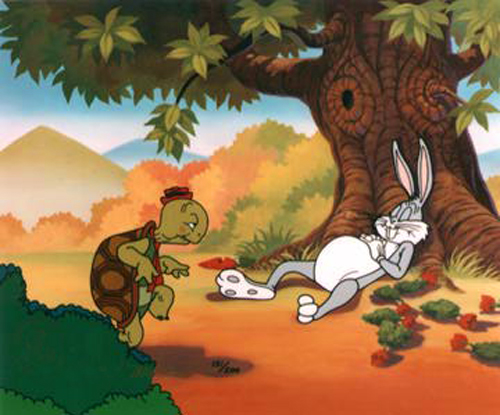
The Tortoise and the Hare, from Warner Brothers

  • I think a big difference from other similar, proverb-esque reading I have done is that every animal is smart in at least one story. They are not always nice or malicious either. These animals seem to have more complex personalities. I have noticed that the smart and cautious (even downright paranoid) animals always come out on top. 
  • I also think it's interesting that a slave is writing so much about embracing who you are, and your place in your social system. If he were born into slavery, it would make no sense. But, if Aesop was put into slavery as an adult, I can see how he would yearn to resume his former life. 
  • I like how these tales focus on self improvement instead of relying on the kindness of others. I think it's important that people take responsibility for themselves. Also, Aesop seems to tell us that we should not expect much from other people, because they are imperfect just like we are. 
  • I feel like many of these fables could apply to combat or warfare. If captured, you should not expect mercy. On that same line of thinking, you should not give mercy to your enemies, because they do not forget, and they will always be dangerous to you. 
  • I think the idea that a mother should be punished for the deeds of the son is against what has been said before. It does not agree with the ideas of personal responsibility and nature vs nurture that have already been presented. 
In the end, I enjoyed these stories. I think that there are a lot of valuable lessons contained in them. 

Week 2 Reading: Aesop's Fables Part A

This week I am reading Aesop's Fables by Joseph Jacobs. This post will cover part A.

The Dog and the Shadow, one of Aesop's Fables. From Laura Gibbs


  • I thought it was interesting how we were told not to disrespect the dying Lion, even after him treating the other animals so poorly. A lot of readings in Indian Epics espoused similar values.
  • I like the how "He who wins writes the history book" is a lesson in this reading. It is a valuable lesson, and one that I don't feel many writers cover. 
  • I like the writing that is in more modern language, and not prose. It is easier to understand, but I appreciate how the prose is shorter, and I can see how some of them turned into colloquialisms (i.e. The Lions Share)
  • The Fox is again a trickster. This is a very common characteristic assigned to the Fox, even in Indian Epics which were written at a different time in a very different culture. 
  • The second collection of Fox tales don't paint him as a trickster, but actually as quite intelligent. Familiarity breeding contempt is something that I have become very accustomed to in college. 
  • I can see how the story of the Fox and the Mosquitoes can be applied to politicians, but I probably would not have picked up on it without being told. I think the story of the Fox losing his tail is more relevant to dealing with politicians. 
  • I agree that the lesson is not to avoid being like the Wolf, but to know how to deal with a Wolf. The Wolf acts purely with selfish instincts, the only way to beat him is to recognize this motivation. 
  • The desire to not be a slave is interesting when you consider that Aesop may have been one himself. It puts these stories about malicious tyrants and the desire for freedom in context. 
  • I feel like nature vs nurture can be a dangerous ideology in some minds. It can justify a lot of awful things, like racism and slavery. Perhaps I lack the cultural context from when these stories were written. 
  • I like the story of the Donkey in Lion skin. I feel like it is similar to "it is better to stay quiet and be thought a fool then open your mouth and remove any doubt". 
Thanks for reading with me.